Spring (April–June): Wildlife emerges, snow may linger, fewer crowds.
Summer (July–August): Warm weather, peak bear viewing, Calgary Stampede.
Autumn (September–October): Foliage, fewer tourists, shoulder season savings.
Winter (December–March): Ski season, snow adventures.
Finding the ‘best’ time to go to Canada really depends on several factors such as your budget, your comfort level, your availability, and your interests.
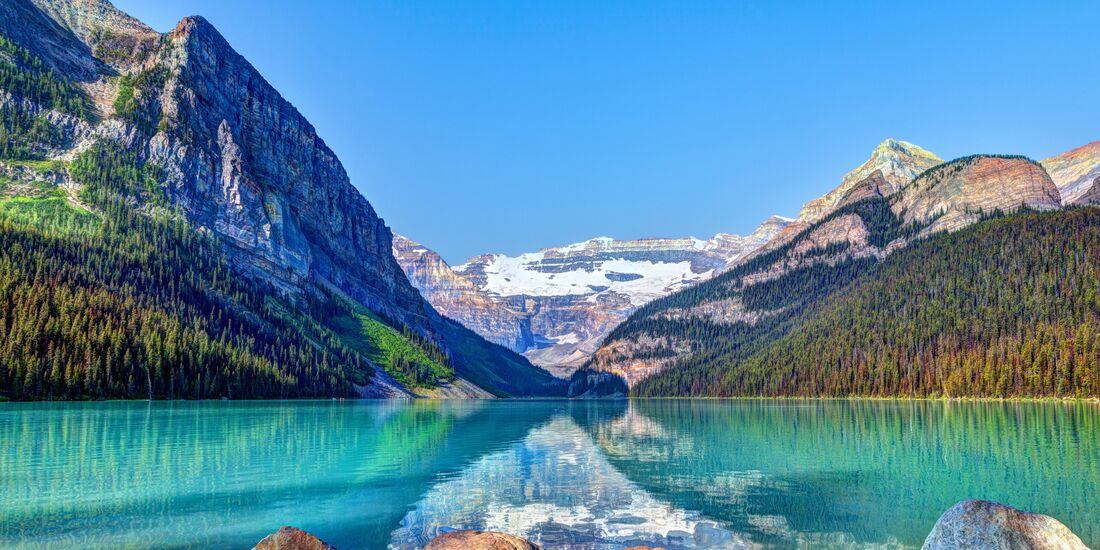
At the end of April and the beginning of October, temperatures can still be colder as Canada comes out, or goes into, winter. For example, some lakes can still be frozen until mid-June, so you don’t get that mesmerising aqua, turquoise colour you’ve maybe seen in pictures.
By the middle of the season it can be beautifully warm, even at higher altitudes. Wildlife also comes out to play with the rising temperatures, as spring turns into summer. Animals begin to come to life and become more active as they align themselves with the new growth of their surrounding areas. This activity and heat peaks in July and August, and by the end of August you’ll see a flurry of activity including bears hunting salmon by the rivers – bear lodges are at their busiest!
That said, wildlife can be seen throughout the season with small bears, wolves, elk and whales still being active with the thaw. Coupled with this, at the earlier part of the season, the Rocky Mountains can look particularly lovely with their snow-capped peaks adding to the dramatic scenery.
Weather and wildlife aside, the influx of people also grows as the season progresses, especially when you start to factor in the summer holidays of international passengers. The Calgary Stampede, typically mid-July, can also give a spike in travellers as they, and their cowboy hats, move to the area to see the infamous chuckwagons races and rodeos.
The winter activity and ski season generally runs from mid-December to March and at times into April.